
Discover what Red Eléctrica is, what we do, and why we are the backbone of the electricity system in Spain and the ecological transition.




The Secretary of State for Energy and the CEO of Redeia visit the works on the interconnection with France via the Bay of Vizcaya
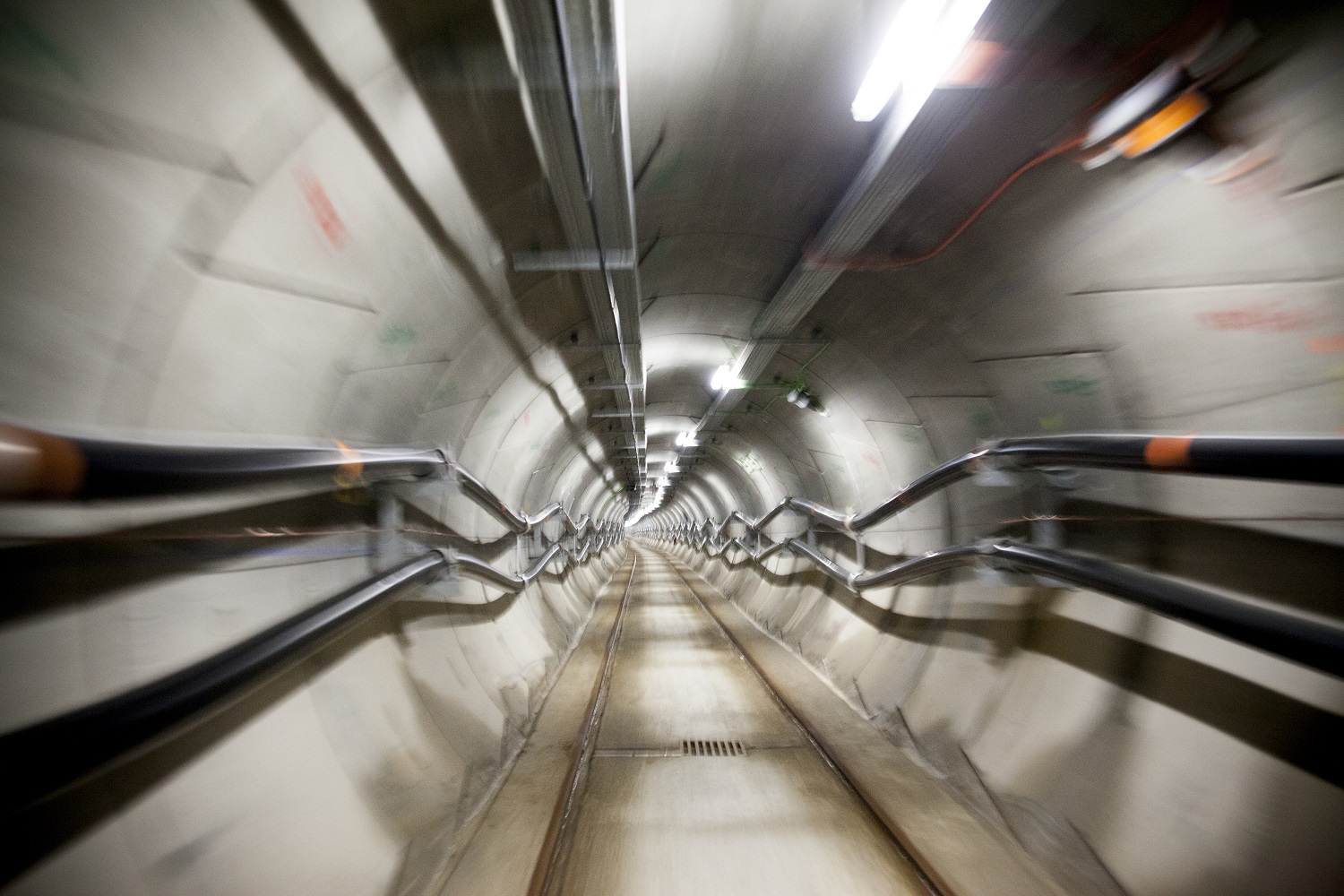
During the visit, they inspected the progress of the works at the Gatika converter station, on the onshore section, and the laying of the submarine cable. The underground and submarine infrastructure is already 70% complete.
Red Eléctrica has completed the first phase of submarine cable laying off the Basque coast, a 65-kilometre section installed by the Danish company NKT.
The interconnection, which is strategic for Europe, will increase electricity exchange capacity between Spain and France from 2,800 to 5,000 MW.
21/09/2026
The Secretary of State for Energy, Joan Groizard, and the Chief Executive Officer of Redeia, Roberto García Merino, today visited the works on the electricity interconnection with France via the Bay of Vizcaya, in the town of Gatika in Vizcaya. The tour was also attended by the Basque Government's Minister for Industry, Energy Transition and Sustainability, Mikel Jauregi, and the Government Delegate in the País Vasco, Mª Soledad Garmendia, who were able to see first-hand the progress of this strategic infrastructure, which is now 70% complete.
During the visit, the project managers explained the status of the main ongoing works, both onshore and offshore. One of the main highlights of the tour was the future Gatika converter station, where the civil works have already concluded and electromechanical assembly is currently underway. This facility will be key to converting the direct current from the submarine and underground line into alternating current, thus enabling its integration into the electricity transmission grid.
The institutional representatives also reviewed the progress of the onshore section of the infrastructure, which is proceeding according to plan. The entire onshore route will run underground, avoiding urban centres and making use of existing tracks and paths wherever possible, to minimise the impact on the local area.
In parallel, Red Eléctrica recently completed the first phase of submarine cable laying off the Basque coast, which began last August. This initial operation involved installing a 65-kilometre section by Danish company NKT, which supplied the cable and laid it using its cable-laying vessel Victoria. A new cable-laying phase is scheduled to begin shortly, this time carried out by Prysmian.
In total, the interconnection will feature four submarine cables, along with additional fibre optic cables running in parallel to enable the operation of the infrastructure. The offshore works will be carried out in several stages between this summer and summer 2027 connecting the Basque and French coasts, near Bordeaux.
The visit also highlighted the environmental design of the infrastructure, which has been conceived to minimise its footprint on the surroundings. The land–sea connection is being carried out using horizontal directional drilling, a technique that protects coastal habitats. Furthermore, the Gatika converter station has been designed adjacent to the existing substation and incorporates landscaping measures to limit its visual impact.
This approach is complemented by environmental studies and monitoring in the marine environment, aimed at understanding and protecting the Bay of Vizcaya ecosystem during the construction phase. Once the works are completed, the land will be restored, and the visible elements will be reduced to small inspection chambers along the onshore section. In addition, the project involves the dismantling of two overhead lines between Gatika and Lemoiz, which will reduce the presence of electricity infrastructure in the area and reinforce the project's sustainability.
Red Eléctrica, the Redeia subsidiary responsible for the transmission and operation of the Spanish electricity system, is developing this interconnection together with its French counterpart, RTE, through the joint venture Inelfe.
A strategic infrastructure for Spain and Europe
The interconnection with France via the Bay of Vizcaya will increase electricity exchange capacity between the two countries from 2,800 to 5,000 megawatts (MW). This increased capacity will strengthen the security and quality of electricity supply, help improve the efficiency of electricity systems, enable greater integration of renewable energies, and play a key role in advancing the European Union's energy self-sufficiency.
This infrastructure has been designated a Project of Common Interest by the European Union and is co-financed through CINEA – the European Climate, Infrastructure and Environment Executive Agency. It is also financially backed by the European Investment Bank (EIB), further reinforcing its strategic nature at a continental level and its contribution to the development of a more interconnected, secure, and sustainable European electricity grid.
Downloads